
Orthodontics & Specialty Care
Interceptive Orthodontics in Jenkintown, PA
Treating while the jaws are still growing, so there is less to correct later.
Interceptive orthodontics is early treatment – carried out while a child still has a mix of baby and adult teeth, and while the jaws are still developing. The aim is not a finished result but a better starting point for whatever comes next.

Exceptional care for a lifetime of healthy smiles
Early treatment at MVP Family Dental
There is a window in childhood when the jaws are still growing and adult teeth are still finding their positions. Some problems are far easier to influence during that window than after it closes, because growth can be worked with rather than worked against.
Interceptive treatment does not usually finish the job. It removes an obstacle – makes room, corrects a crossbite, stops a habit – so that later treatment is simpler, shorter, or in some cases unnecessary.
How it works
Watch first, then act
Most children who are assessed early are monitored rather than treated. Acting at the wrong moment is as unhelpful as not acting at all.
- Early assessmentThe bite, the arch width and which teeth are through are examined, usually alongside a routine visit.
- Imaging where usefulImages show whether the adult teeth are present, where they are sitting and what order they are due in.
- MonitoringMany findings are simply watched at subsequent visits, because the right moment to act has not arrived.
- Intervening at the right pointWhere treatment is indicated, it is timed to the stage of development rather than to a birthday.

What early treatment can influence
Things easier to change during growth
These are the situations where timing genuinely changes what is possible.
- A narrow upper archWidening is far more straightforward while the palate is still developing – see Orthodontic Expanders.
- CrossbitesA bite where upper and lower teeth meet the wrong way round can push growth off course if left.
- Space for adult teethWhere a baby tooth is lost early, the space it was holding can close before the adult tooth arrives.
- HabitsProlonged thumb sucking and mouth breathing affect how the jaws develop, and are easier to address young.
What treatment can involve
Appliances used during growth
Early treatment tends to use simple appliances aimed at one specific problem, rather than full fixed braces.
-
Expanders
Widen a narrow upper arch while the palate is still developing. See the Orthodontic Expanders page.
-
Space maintainers
Hold open the space left by a baby tooth lost early, so the adult tooth below has somewhere to come through.
-
Partial braces
Brackets on a limited number of teeth to correct one specific problem rather than aligning the whole arch.
-
Habit appliances
Discourage thumb sucking or tongue posture where these are affecting how the jaws are developing.
When to have a child assessed
Earlier than treatment
Assessment and treatment are different things. Having a child looked at early does not commit them to anything – it establishes whether there is something that benefits from timing, and if there is not, that is a useful answer too.
The common guidance is a first orthodontic assessment around age seven, when the first adult molars and incisors are usually through and the shape of the developing bite becomes readable.
- Around age sevenThe usual point at which a developing bite becomes readable.
- Most are monitoredAssessment far more often leads to watching than to treating.
- A first phaseWhere treatment happens, it usually simplifies later work rather than replacing it.
Worth mentioning
- Thumb sucking, dummy use or persistent mouth breathing.
- Difficulty biting or chewing, or a jaw that shifts to one side to close.
- Baby teeth lost early, whether through decay or a knock.
- A family history of crowding, extractions or jaw discrepancies.

What comes next
A first phase, not the last word
After an interceptive phase, most children are monitored while the rest of the adult teeth arrive. Whether a second phase is needed becomes clear at that point, and it is a decision made then rather than assumed now.
Where an appliance was used, retention often follows the same logic as it does in adult orthodontics – the correction is held while everything around it settles.
Timing is the whole advantage. Growth is a tool you only get to use once.
MVP Family Dental · Jenkintown, PA
The short answer
Interceptive orthodontics is early-phase orthodontic treatment for children, carried out while they still have a mix of baby and adult teeth and the jaws are still growing. The aim is to guide jaw growth, correct developing bite problems and make later treatment simpler, shorter or in some cases unnecessary, by working with growth rather than against it. It does not usually finish the job: it removes an obstacle, such as making room, correcting a crossbite or stopping a habit.
Interceptive Orthodontics Questions
- What is interceptive orthodontics?
- Interceptive orthodontics is early orthodontic treatment carried out while a child still has a mix of baby and adult teeth and the jaws are still growing. The aim is to make later treatment simpler, shorter or unnecessary. There is a window in childhood when some problems are far easier to influence, because growth can be worked with rather than worked against. Treatment removes an obstacle rather than finishing the alignment.
- At what age should my child be assessed?
- Commonly around age seven, when the first adult molars and incisors are usually through and the shape of the developing bite becomes readable. Assessment and treatment are different things, so having a child looked at early does not commit them to anything. It establishes whether there is something that benefits from timing, and if there is not, that is a useful answer too.
- Does an early assessment mean early treatment?
- No. Most children who are assessed early are monitored rather than treated. Acting at the wrong moment is as unhelpful as not acting at all, so many findings are simply watched at subsequent visits. The assessment establishes whether timing matters in their case.
- Will my child still need braces later?
- Often yes, but a shorter or simpler course. Interceptive treatment removes an obstacle rather than finishing the alignment. After an early phase most children are monitored while the rest of the adult teeth arrive, and whether a second phase is needed becomes clear at that point. It is a decision made then rather than assumed now.
- What appliances are used?
- Typically expanders, space maintainers, partial braces or habit appliances, which are simple appliances aimed at one specific problem rather than full fixed braces. An expander widens a narrow upper arch while the palate is still developing, and a space maintainer holds open the space left by a baby tooth lost early. Partial braces put brackets on a limited number of teeth to correct one thing. Habit appliances discourage thumb sucking or tongue posture where these are affecting how the jaws develop.
- Why not just wait until all the adult teeth are in?
- Because some problems are far easier to influence while the jaws are still growing. A narrow upper arch, a crossbite, or space lost after a baby tooth comes out early all fall into that category. A crossbite left alone can also push growth off course. After growth, the options narrow.
- Does early treatment hurt?
- Appliances commonly feel tight or odd for a short period after fitting or adjustment. That usually settles as the child gets used to it. Tell us if anything is sharp or persistently sore.
- How do I arrange an assessment?
- Mention it at your child’s next routine visit, or contact us to book one. It is worth telling us about thumb sucking, dummy use or persistent mouth breathing, any difficulty biting or chewing, baby teeth lost early, and any family history of crowding or extractions. All of those feed into whether timing matters in their case.
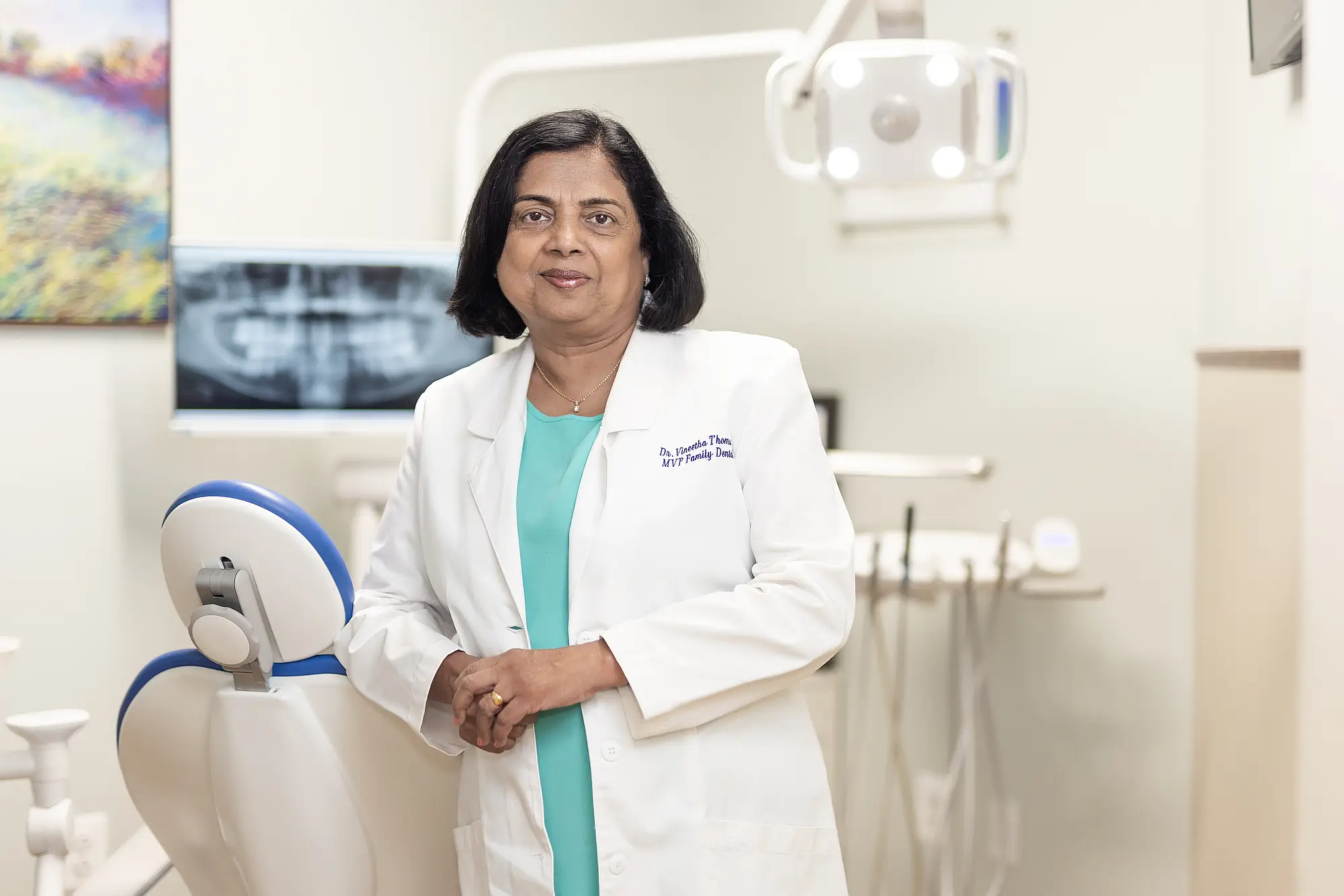
Dr. Vineetha Thomas, D.M.D.
LEARN MORE
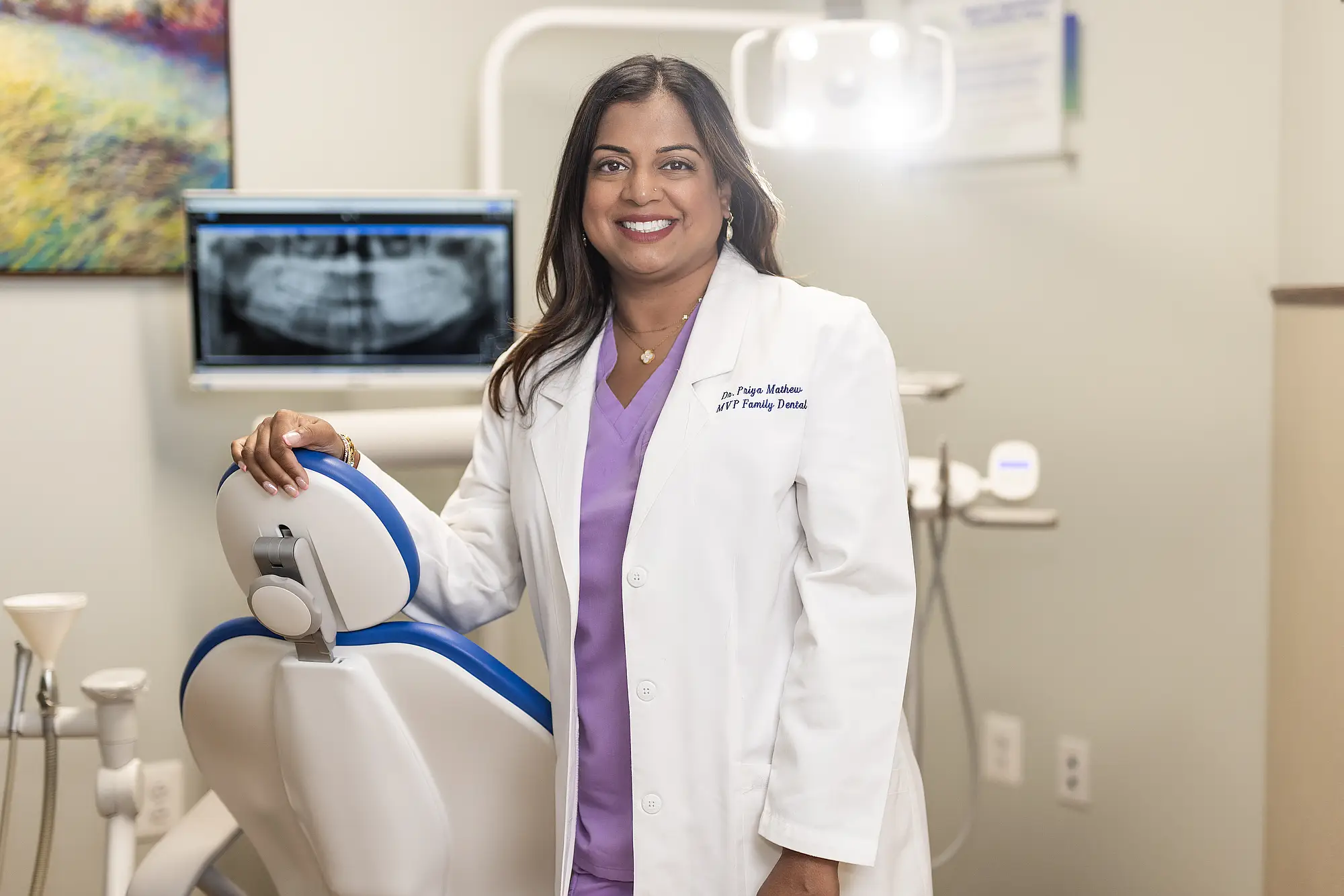
Dr. Priya Mathew, D.M.D.
LEARN MORE