
Restorative Dentistry
Partial Dentures for Back Teeth in Jenkintown, PA
Molars do the chewing. Their absence shows up at meals.
Missing back teeth are easy to ignore because they do not show. What they change is what you can comfortably eat, and how the rest of the arch behaves over time. A partial denture for the back teeth addresses both.
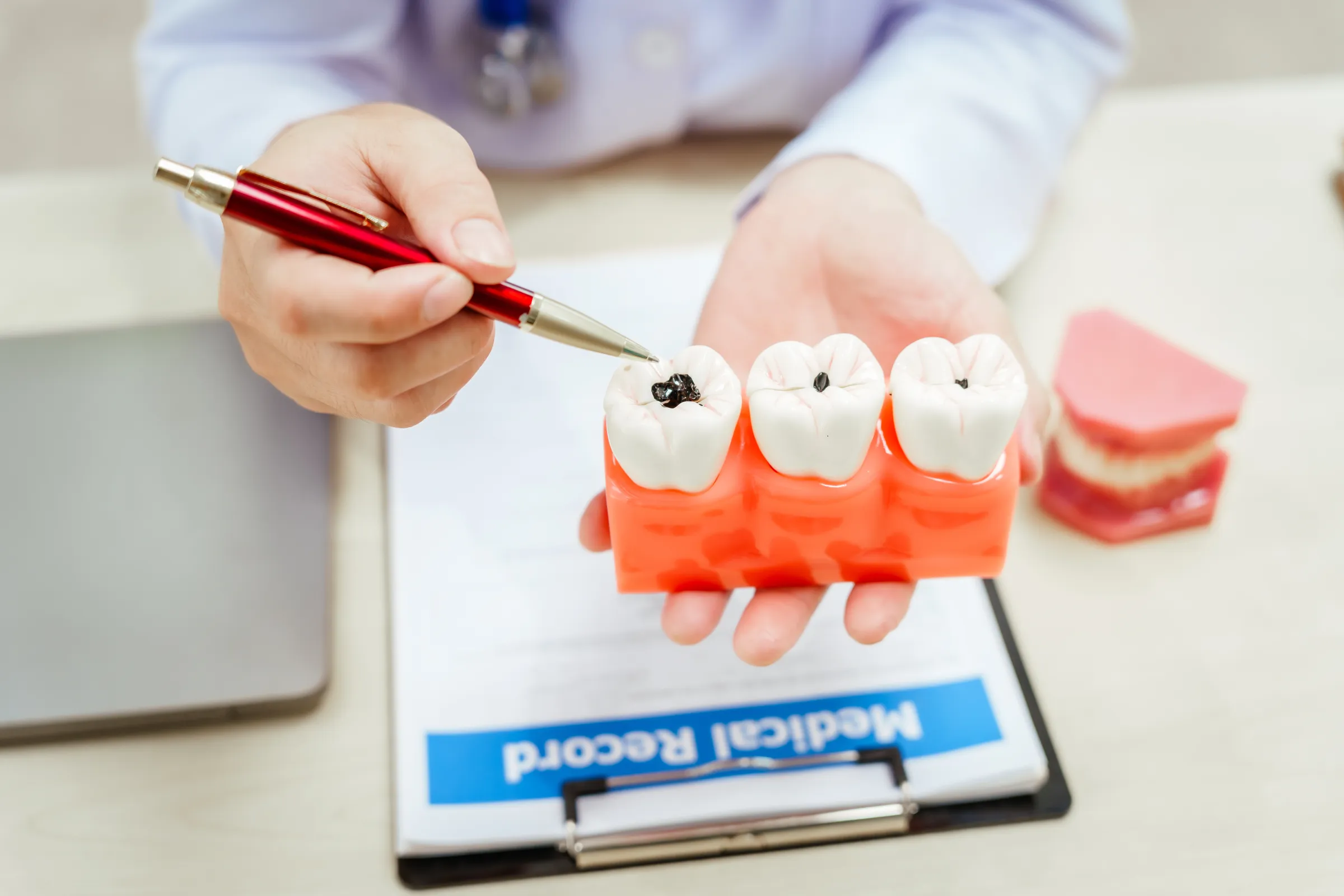
Exceptional care for a lifetime of healthy smiles
Back-tooth partials at MVP Family Dental
Because molars are not visible, patients often live with the gaps for years. The cost of that is usually not appearance but function: certain foods become difficult, and chewing shifts onto the teeth that remain.
Filling the space also protects the arrangement of the arch. Adjacent teeth are less likely to drift, and the bite is less likely to change around the gap.
How it is made
Replacement teeth on an acrylic base
A back-tooth partial is a straightforward appliance, made to sit against your gums and around the teeth you still have.
- Natural-looking teethReplacement teeth shaded to sit with the ones around them.
- A comfortable baseAn acrylic base designed to blend with the gum and spread the load.
- Fitted around your own teethMade from records of your mouth so it seats against the ridge and the remaining teeth.
- RemovableTaken out for cleaning and generally overnight.
How treatment works
From assessment to chewing again
Treatment runs across a few appointments, with the denture made between them.
- AssessmentWe look at which molars are missing, the state of the remaining teeth and gums, and your bite.
- Any preparatory treatmentWork the remaining teeth or gums need is completed first.
- RecordsImpressions or scans so the denture is made to fit your ridge and your teeth.
- Fitting and reviewThe denture is fitted, the bite checked, and adjustments made at review.
Why not leave it
What changes if the gap stays
Missing back teeth rarely stay a contained problem. These are the reasons we would raise it even when it is not bothering you yet.
- Chewing shiftsThe remaining teeth take more load than they were meant to.
- Teeth driftAdjacent teeth can tilt into the space and the opposing tooth can over-erupt.
- The bite changesWhich can lead to more complex problems later than the original gap.
Worth mentioning at your appointment
- Foods you have stopped eating or now avoid.
- How long the teeth have been missing.
- Any clicking, aching or jaw discomfort while chewing.
- Any partial denture you have worn before and how you got on with it.
Two generations of dentists, one shared commitment to helping Jenkintown families eat, speak and smile with confidence.
MVP Family Dental · Jenkintown, PA

The short answer
A partial denture for the back teeth is a removable appliance that replaces missing molars, restoring chewing function and helping prevent the adjacent teeth drifting and the bite changing. Because molars are not visible, patients often live with the gaps for years, and the cost of that is usually not appearance but function: certain foods become difficult and chewing shifts onto the teeth that remain. It is replacement teeth shaded to sit with the ones around them, on an acrylic base made from records of your own mouth.
Back-Tooth Partial Questions
- Do I need to replace back teeth if they do not show?
- Back teeth do most of the chewing, so their absence usually changes what you can comfortably eat. Replacing them also helps stop the remaining teeth drifting and the bite changing around the gap. Adjacent teeth can tilt into the space and the opposing tooth can over-erupt. That tends to lead to more complex problems later than the original gap.
- What is it made of?
- Replacement teeth shaded to match the ones around them, on an acrylic base designed to sit comfortably against the gum and spread the load. It is made from records of your mouth so it seats against the ridge and around the teeth you still have. That is what makes it a straightforward appliance rather than a complicated one.
- Is it removable?
- Yes. It comes out for cleaning and generally overnight. It is cleaned out of the mouth with a soft brush and a denture product, while your natural teeth are brushed as normal.
- Will it stop my other teeth moving?
- Filling the space makes drifting less likely, which is one of the main reasons for replacing back teeth rather than leaving the gap. It also keeps the opposing tooth meeting something when you bite. Protecting the arrangement of the arch is as much the point as restoring the chewing.
- Could I have an implant or a bridge instead?
- Possibly. Both are options for back teeth, depending on the bone available and the state of the neighboring teeth. We will compare them with you at the assessment rather than settling it in advance.
- How long does it take to get used to?
- There is an adjustment period with any removable appliance. Pressure points are relieved at the review appointments rather than endured, so tell us where it is rubbing. If you have worn a partial before, how you got on with it is useful to know.
- How do I clean it?
- Out of the mouth, with a soft brush and a denture product, while your natural teeth are brushed as normal. Cleaning it out of the mouth is also safer for the appliance itself. It is generally left out overnight.
- How do I start?
- Book an appointment. The assessment establishes which replacement option fits your case, looking at which molars are missing, the state of the remaining teeth and gums, and your bite. It is worth mentioning foods you have stopped eating, how long the teeth have been missing, and any clicking, aching or jaw discomfort while chewing.
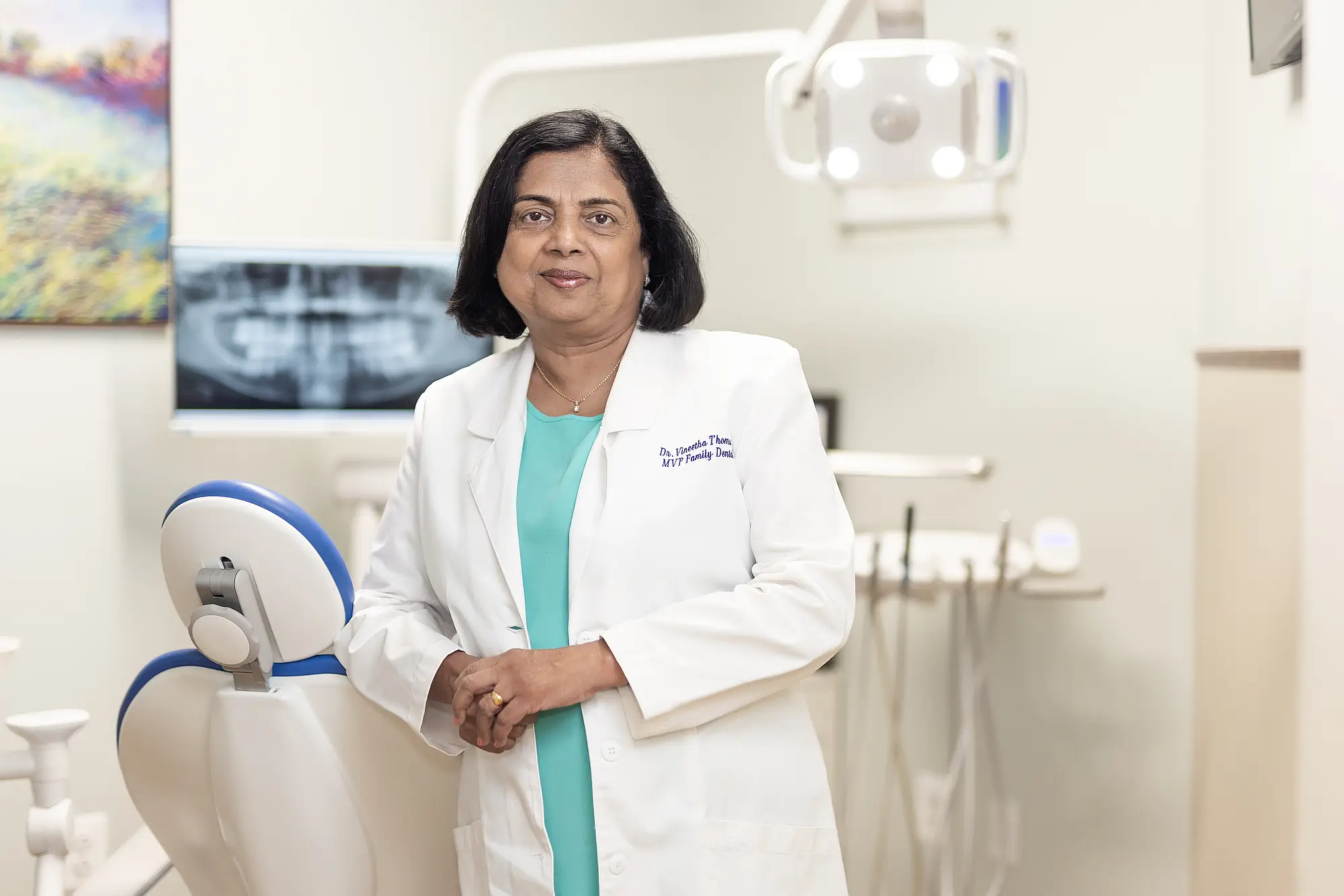
Dr. Vineetha Thomas, D.M.D.
LEARN MORE
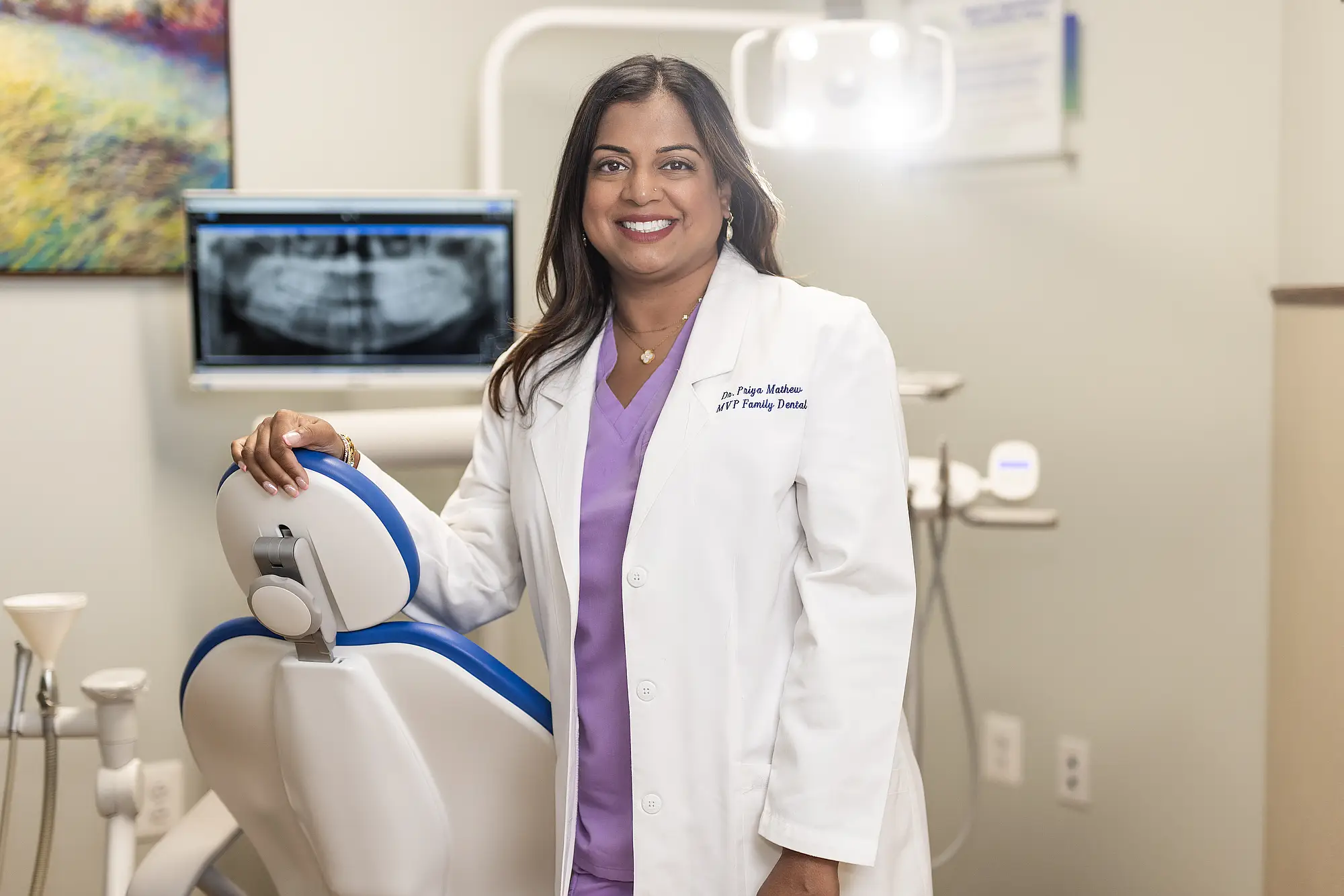
Dr. Priya Mathew, D.M.D.
LEARN MORE